
You want a garage floor that stands up to bikes, kids, and Florida humidity while still looking good. This article helps compare color and texture options so you can pick a floor that balances durability, ease of cleaning, and slip resistance for a busy household.
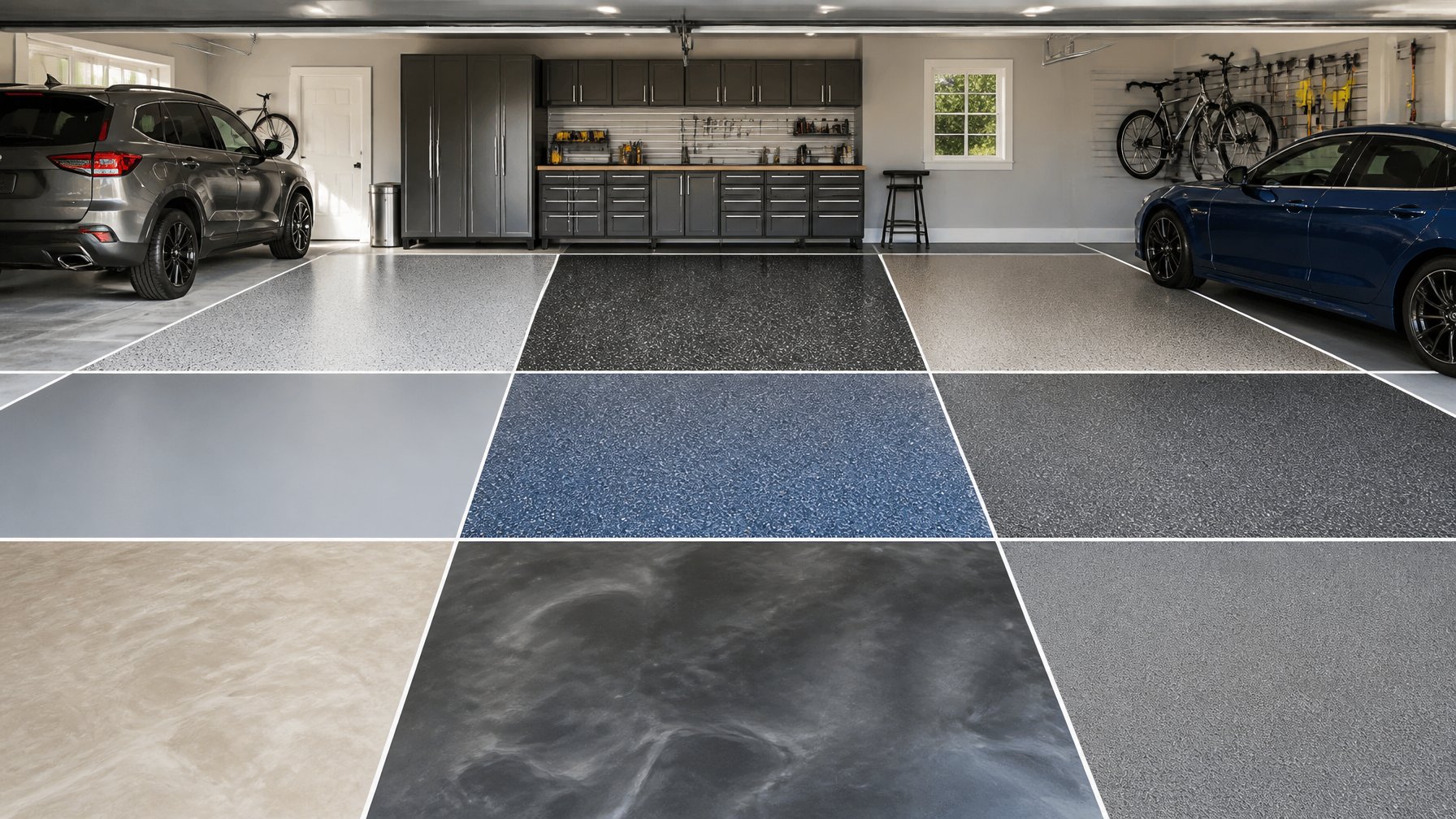
Bold the sentence providing value: Compare cost, maintenance, slip resistance, and style to choose the floor that fits your daily needs and climate.
1) Durable epoxy flake floor with neutral color chips
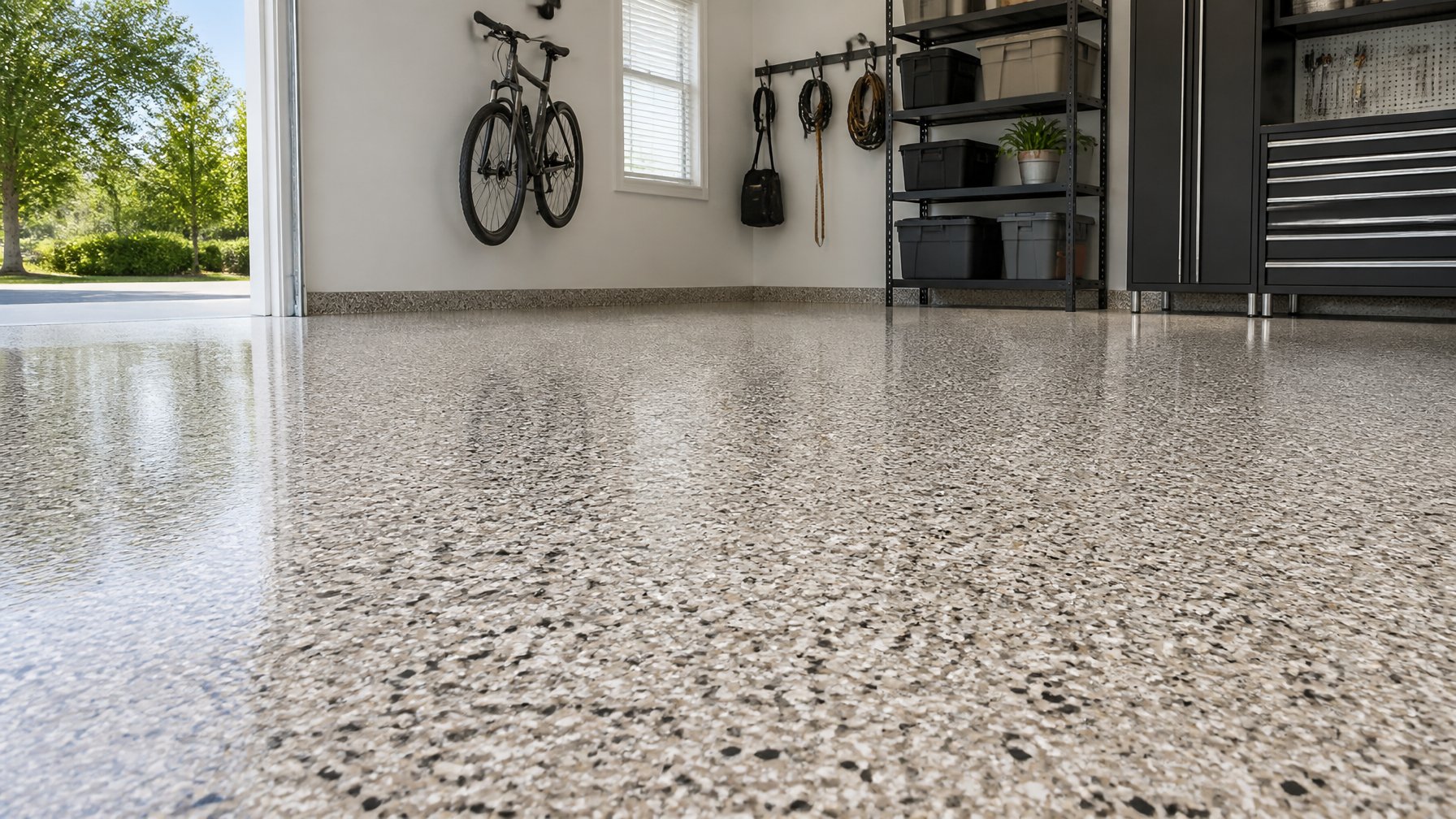
A durable epoxy flake floor uses a base epoxy, mixed flakes, and a clear topcoat. Homeowners should compare chip density and flake size; denser flakes hide dirt better but cost more.
Ask about slip resistance and UV-stable topcoats to avoid yellowing. The tradeoff is style versus maintenance: neutral chips mask stains but show oil spots on light areas.
Check prep work and warranty details before hiring. For design ideas and installation services visit the homepage.
2) Matte microcement for seamless modern look
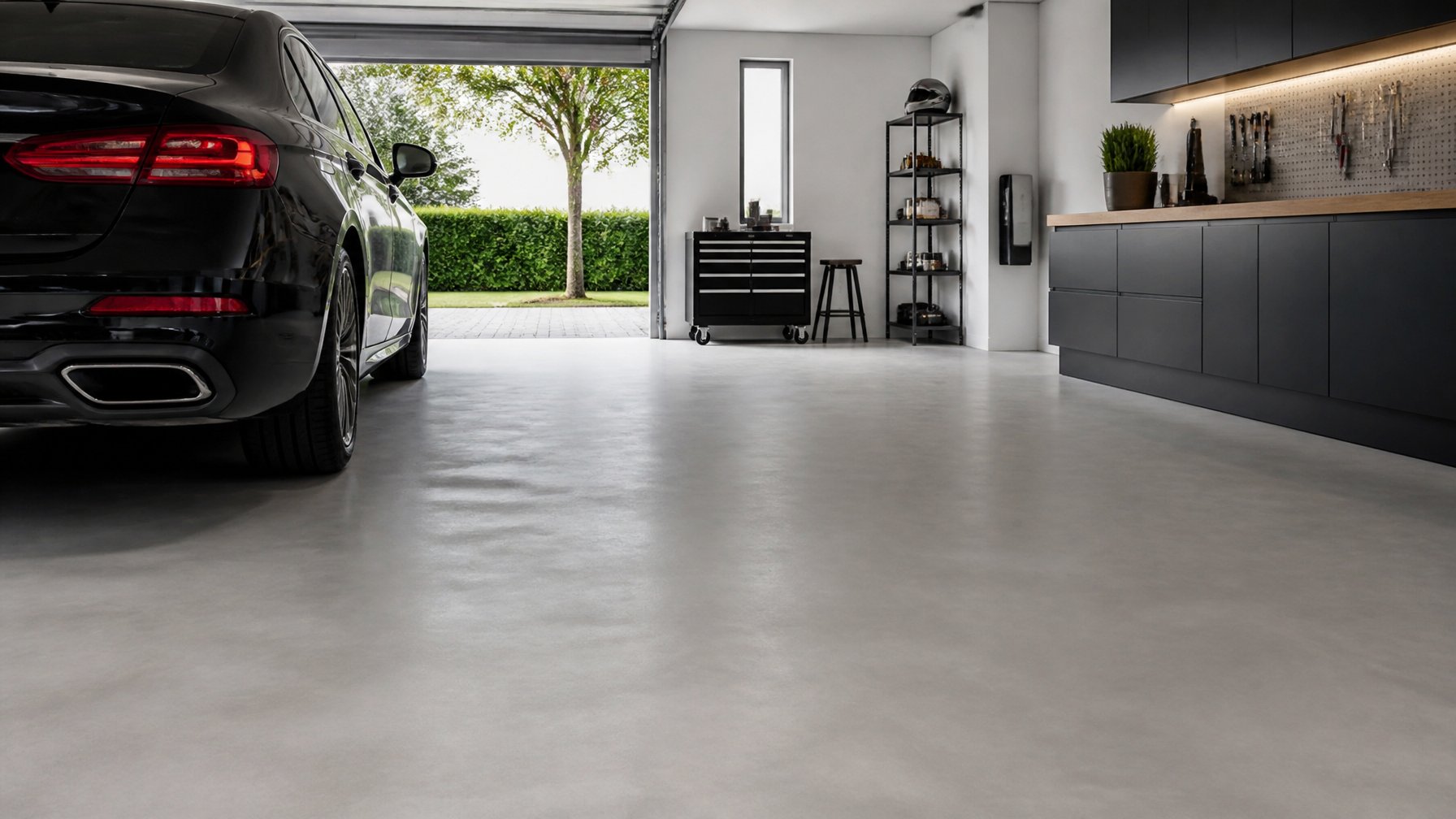
Matte microcement gives a smooth, continuous floor that hides seams and grout lines. Homeowners should compare durability ratings and slip resistance when choosing mixes for heavy traffic or kids.
Ask about surface prep time and whether a primer is needed, since poor prep causes cracking. Tradeoffs include higher initial cost and skilled application versus a low-maintenance, modern finish.
They should consider color matching to walls and storage units; matte finishes hide scuffs better than glossy ones but show dust. For installation options and service details, see the homepage.
3) High-gloss polyurethane acrylic for easy cleaning
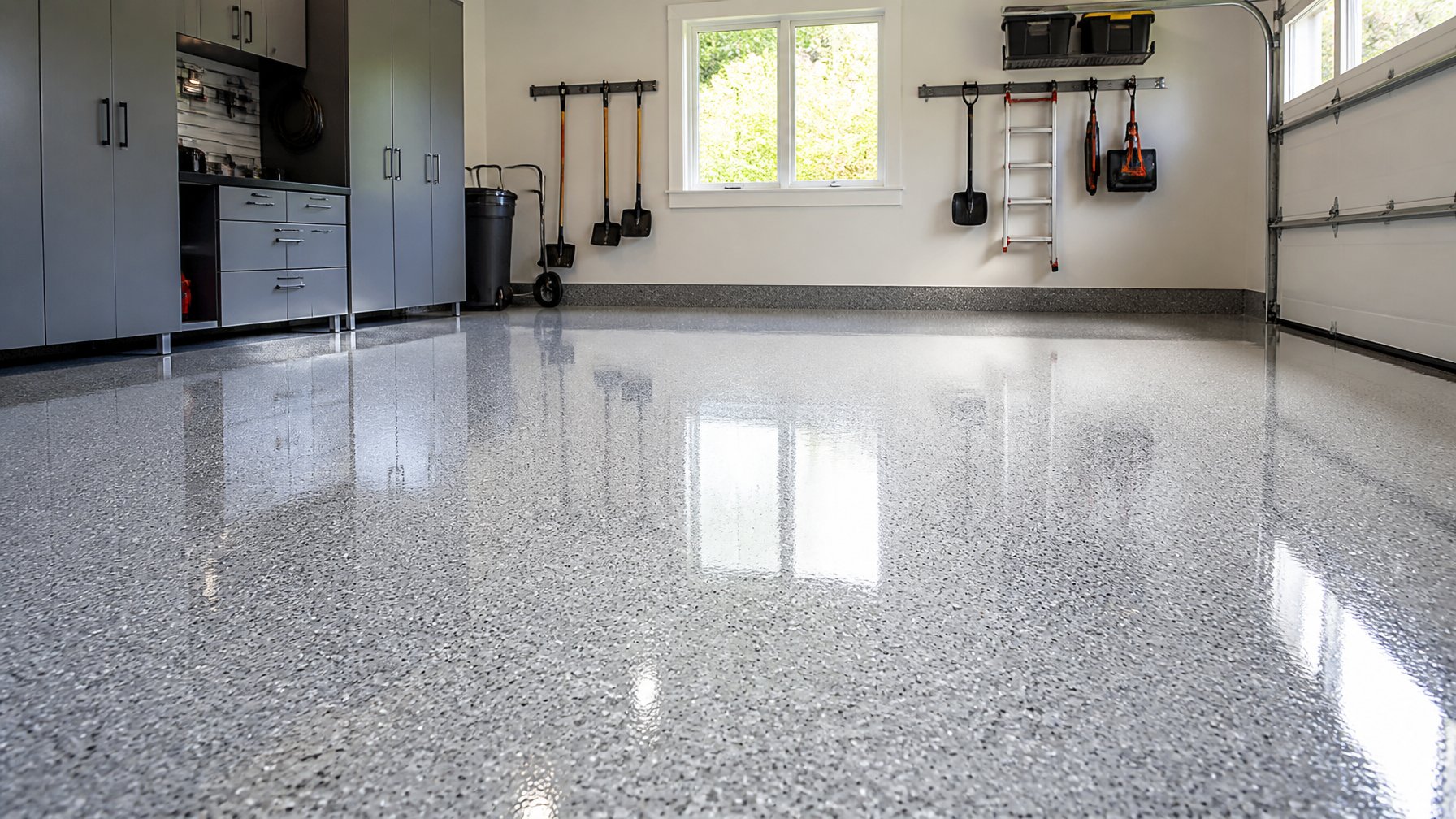
High-gloss polyurethane acrylic gives a slick, shiny surface that wipes clean fast. Homeowners should compare gloss levels and chemical resistance; higher gloss looks brighter but can show scratches more.
Ask about VOC levels and drying time before buying. Low-VOC formulas are safer indoors, and faster cures mean less downtime for a busy household.
Consider the tradeoff between slip resistance and shine. Add a light non-slip additive if people will walk on the floor when wet, but expect a slight loss of sheen.
It helps to test a small patch for adhesion on the garage concrete. For product options and professional application advice, visit the homepage.
4) Textured anti-slip epoxy with fine grit additive
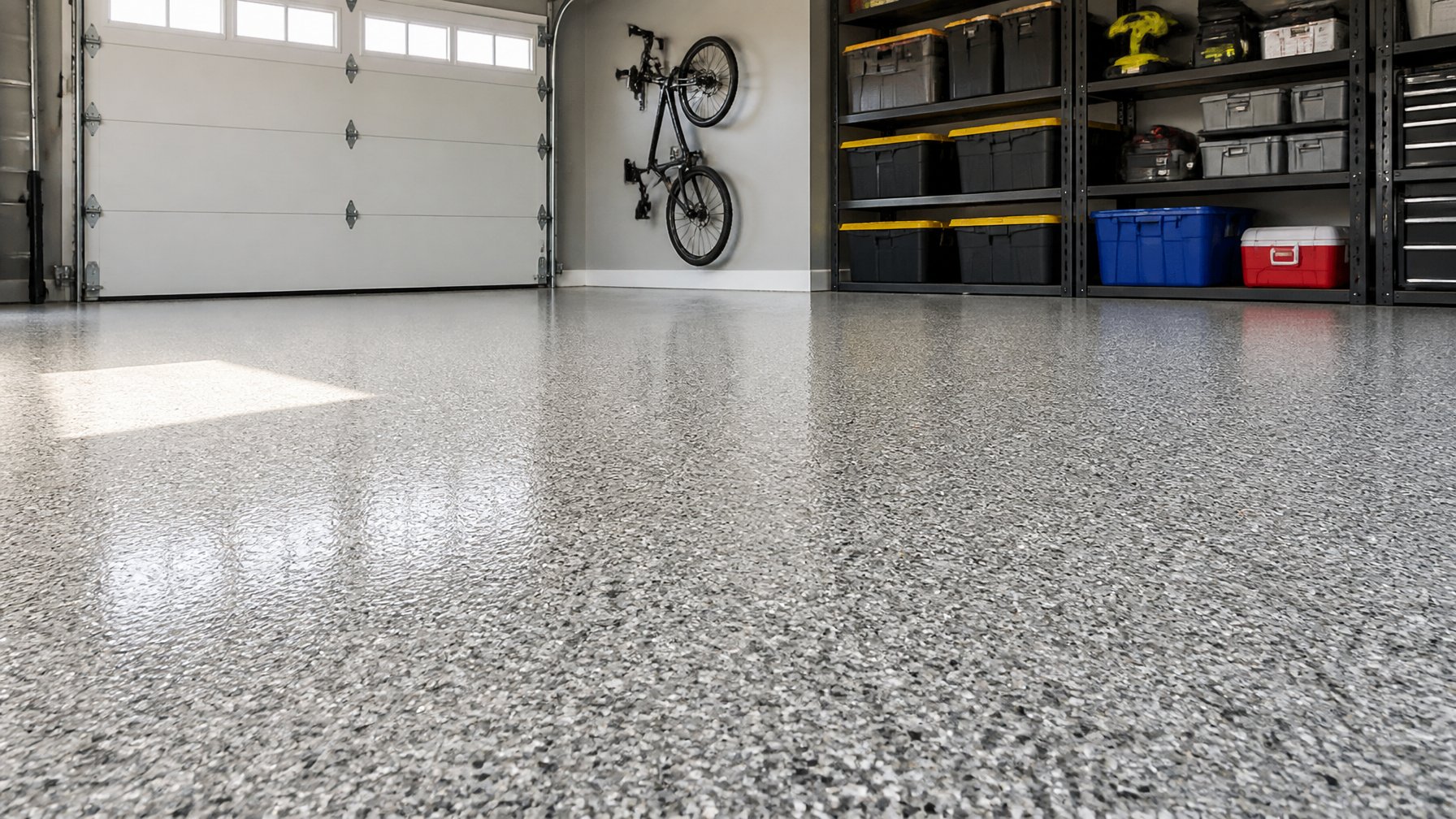
Textured anti-slip epoxy adds grit to a standard epoxy floor so it resists slipping when wet. Homeowners should compare grit sizes; finer grit gives a smoother feel but less traction, while coarser grit increases grip but can be rough on bare feet and tires.
Ask about the epoxy’s slip-resistance rating (COF) and whether a clear or pigmented topcoat is needed to lock the grit in place. Consider the tradeoff between ease of cleaning and traction: finer grit cleans easier, coarser grit hides dirt better.
They should also check cure time and recoat windows to fit a busy schedule. For product options and installation services, see garage floor coatings.
5) Two-tone painted floor with non-slip striping
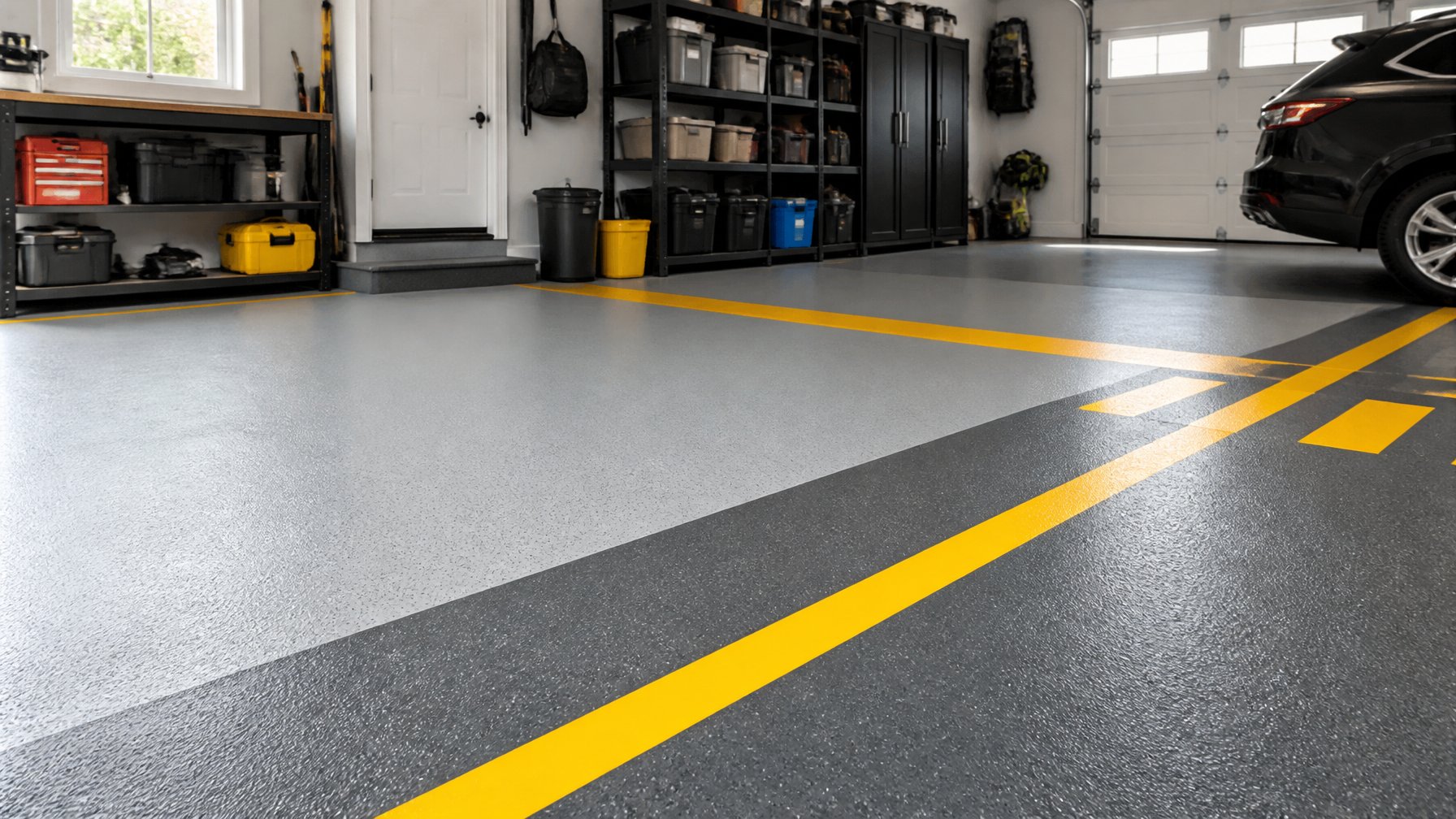
They pick two contrasting colors to mark zones — a darker color for parking and a lighter color for work or storage. Compare paint types: epoxy offers durability, while acrylic is cheaper and easier to touch up. Ask about slip-resistance ratings and cure time so the family can return to the garage quickly.
Non-slip striping adds safety along walkways and thresholds. Choose tape or textured additive for the paint; tape is cleaner, additives give a uniform finish. Weigh aesthetics versus maintenance: textured stripes hide scuffs but trap dirt more easily.
Measure and mask carefully to keep lines straight and even. Use a chalk line or laser for long runs and test a small patch for adhesion. For more guidance on finishes and prep, see the homepage.
6) Stained concrete in warm earth tones
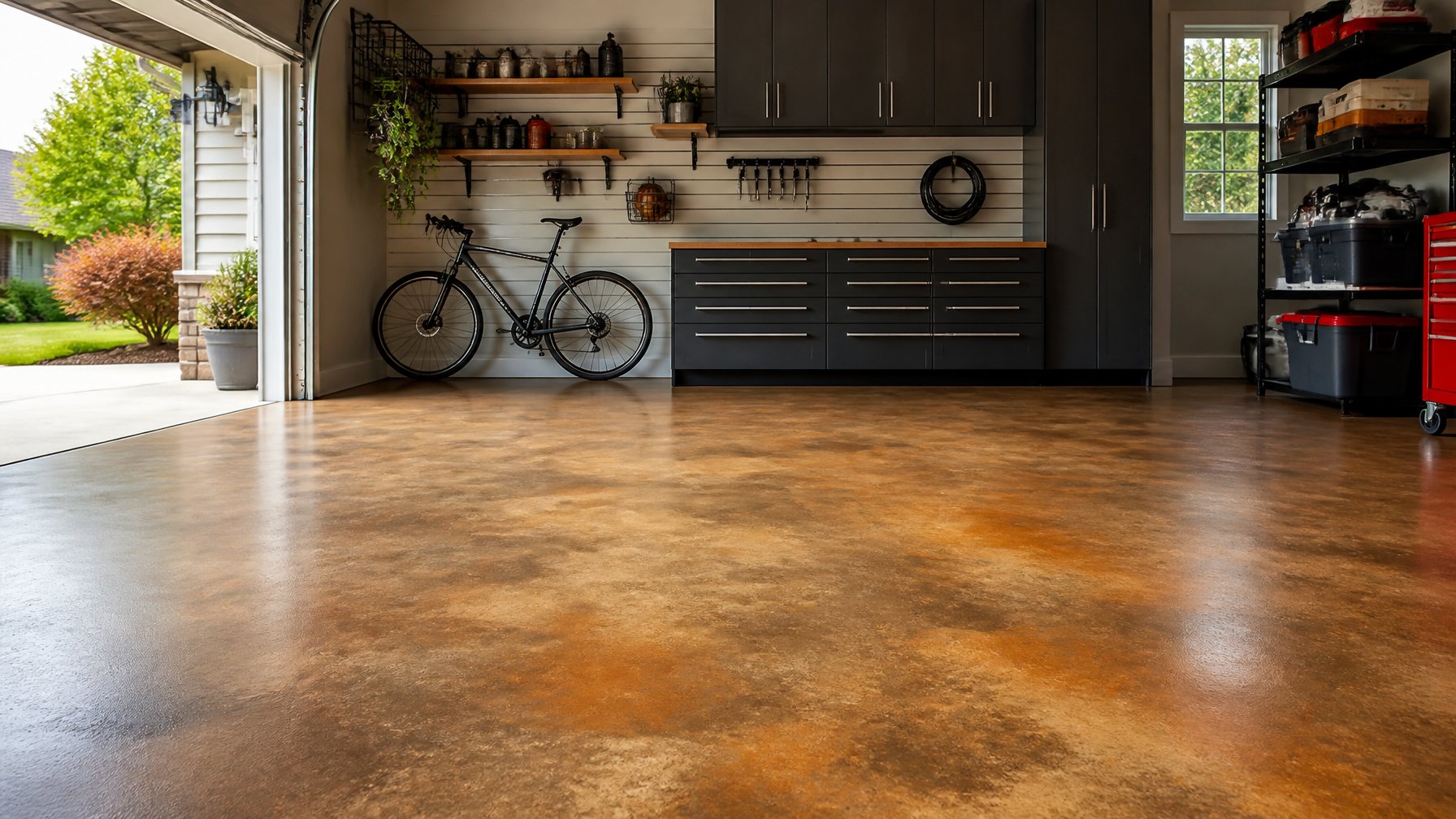
Stained concrete gives garages a natural, low-key look that hides dirt well. Homeowners should compare acid stains and water-based stains for color depth and ease of application.
Ask about porosity and sealer options. More porous slabs need a primer or densifier; sealers add shine and protect against oil stains but change the final tone.
Pick warm earth tones like tan, terracotta, or soft brown to match wood trim or brick. The tradeoff: darker tones hide marks but show dust; lighter tones show spills more but brighten the space.
Consider maintenance needs and recoat intervals. They should check whether the installer includes surface prep, and view examples on the homepage before booking a contractor.
7) Interlocking PVC garage floor tiles in charcoal
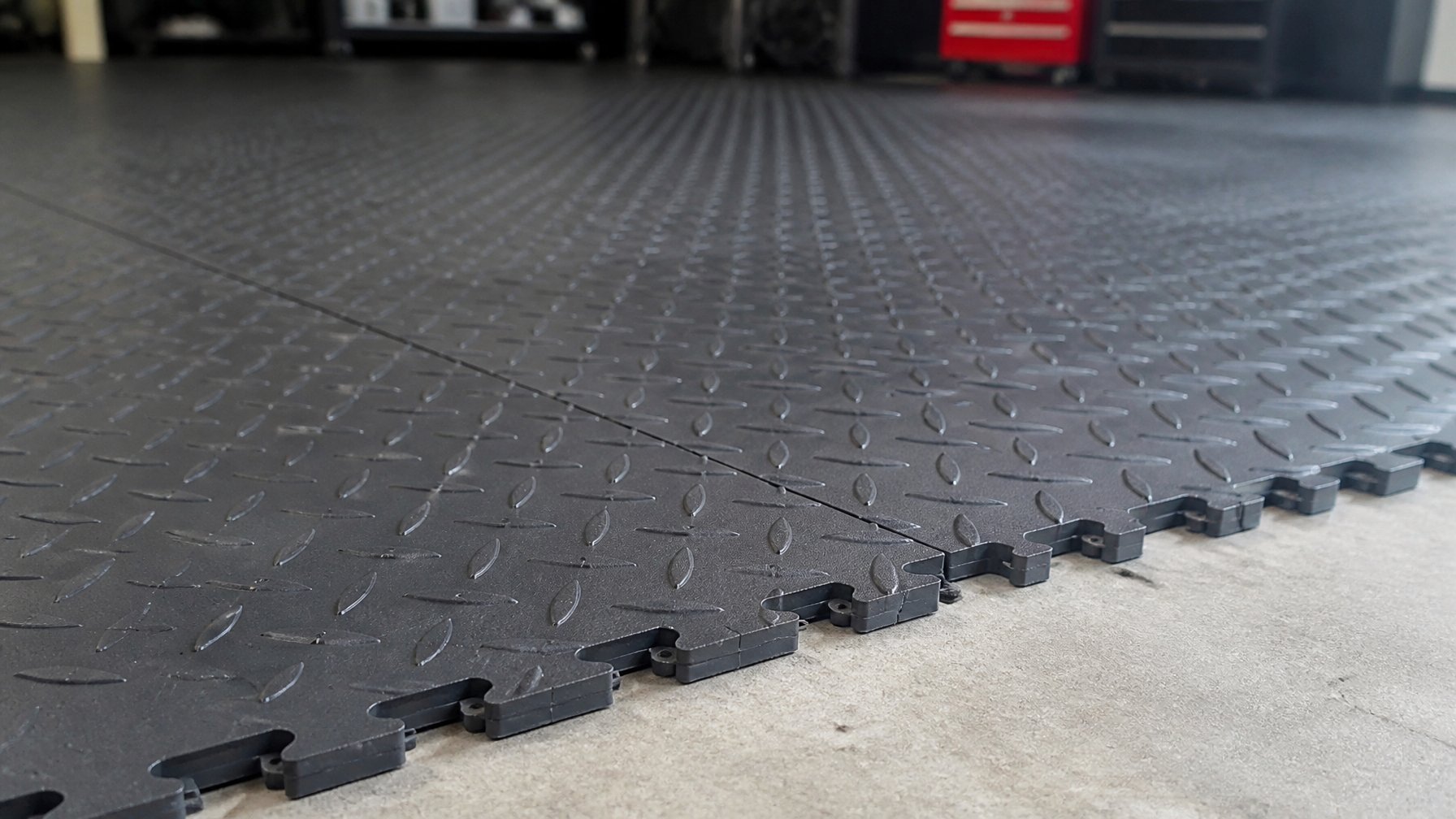
Interlocking PVC tiles offer a fast, DIY-ready solution. Homeowners should compare tile thickness, surface texture, and locking system; thicker tiles resist impact but cost more.
Charcoal hides dirt and looks modern without showing oil stains. Ask about slip resistance and chemical resistance; smoother tiles feel nicer but can be slippery when wet.
Tiles lift for easy cleaning and access to the concrete below. Consider the tradeoff between a cushioned feel and weight capacity — softer tiles are comfortable but may dent under heavy tools.
They work well over imperfect concrete and can be cut to fit around cabinets. For installation help and product choices, see the garage floor services page.
8) Polished concrete with dyed aggregates
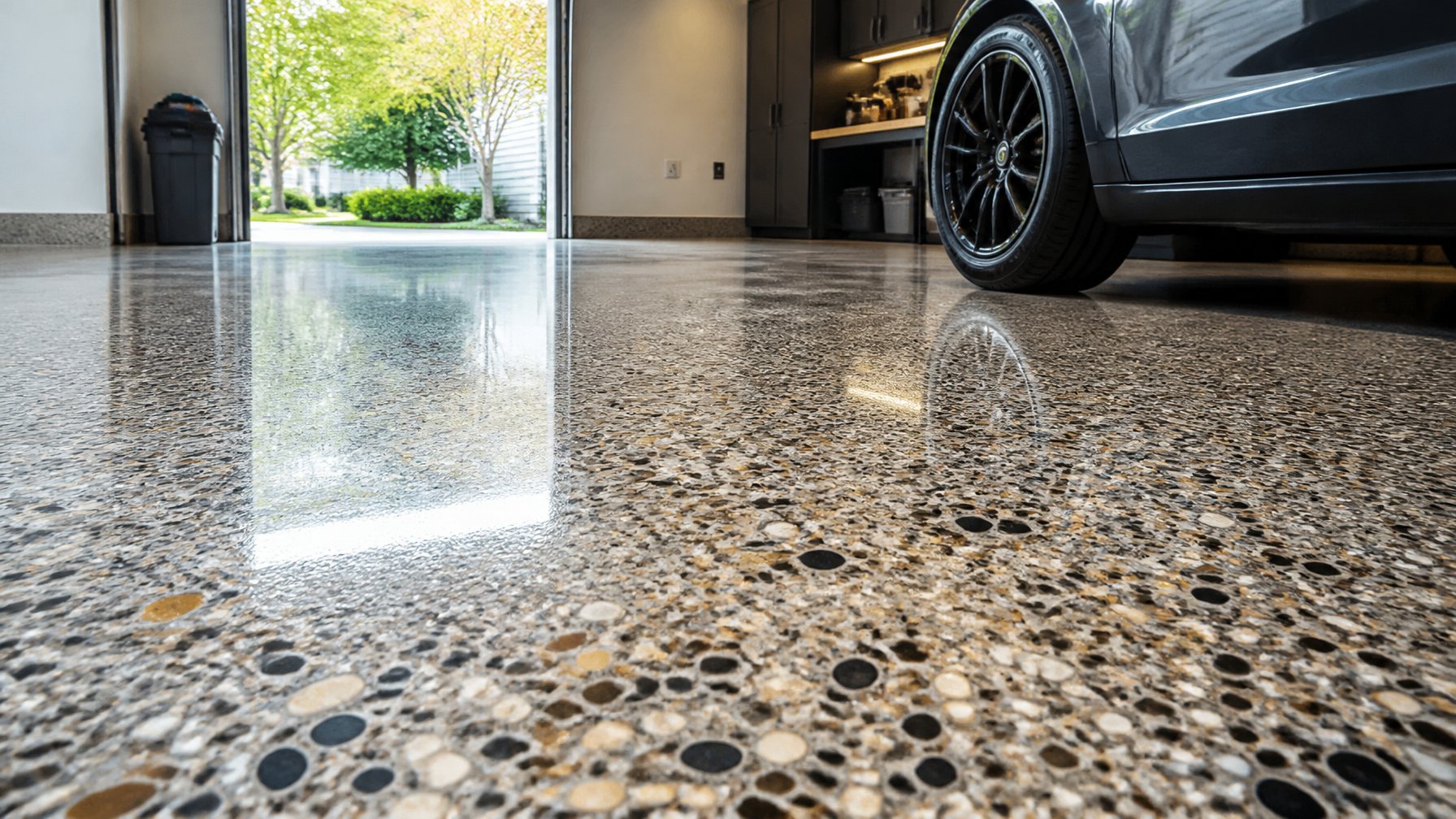
Polished concrete with dyed aggregates gives a sleek, low-maintenance floor that still shows personality. Homeowners should compare dye color options and aggregate types to match light reflection and slip resistance.
Ask contractors how many grinding passes they plan and what grit they will use, since that affects shine and durability. They should also discuss sealing options and how often resealing is needed for a busy garage.
The main tradeoff is cost versus longevity. Polished concrete costs more upfront than paint, but it resists stains and traffic and needs less frequent repair.
For inspiration or to compare finishes, check the homepage for examples and service details. Images for this option should show realistic garage scenes with clear edges, visible aggregate, and even shine.
9) Rubberized garage flooring rolls in slate gray
Rubberized flooring rolls offer cushioned, slip-resistant coverage that stands up to heavy use. Homeowners should compare thickness, durability ratings, and whether the material resists oil and chemical stains.
They must ask about installation type — glue-down versus loose-lay — and weigh ease of DIY against a tighter fit from a pro. Consider seams: fewer seams mean easier cleaning but may cost more in material width.
Slate gray hides dirt but stays neutral with many garage aesthetics. For samples and buying options, check the homepage for product listings and installation guidance.
Measure the garage carefully and calculate waste for cuts around doors and cabinets. Tradeoffs include comfort and noise reduction versus upfront cost and seam visibility.